

 20
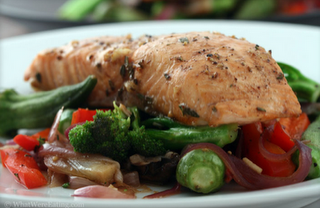
20This week, I’ll continue with my protein powder dissection. Like I said in my last post about soy protein, I know that a lot of you make exceptions in your otherwise Paleo diets for things like protein powders. As I’ve iterated over and over, I do not condone protein powders as mainstays in people’s diets – it hurts my soul to think of you guys subsisting on weird, flavored powders. Real, whole, nutrient dense food is the way to go. Instead of protein powders, eat this.
A friend wrote me an email regarding my last post on soy protein powder, and I’ll share it with you here:
Wow, that’s cool Neely. I’ve never liked soy because I never felt it was food. Do take a look at this one. I feel that I’m somewhat eating food when I use it. Give us the lowdown on this type of protein.
PS: I don’t feel that whey is food either, except if I have it once in a blue moon. Egg protein I suspect is better but it’s so expensive.
I looked at the protein powder he linked me to, which is a rice protein/pea protein mix. It’s a mix because rice and pea are both low in certain amino acids (the building blocks of protein), but when put together they sort of complete each other. Here’s my response to his email:
About your question. I have a question for you in return. Why do you use protein powder?
About your pea/rice protein powder:
1. It’s not organic, so there’s a good chance you’re getting GMO’s and pesticides, among other things. Not good.
2. Rice and peas both contain lectins, phytates and other anti-nutrients – so they’re not the easiest things in the world to digest, even after they’ve been über-processed to make the powder.
3. It says they’re “hypo-allergenic”, unlike whey, soy and egg. Not true. The term “hypo-allergenic” is misleading and arbitrary. We all are sensitive to different foods. You might be sensitive to rice, and I might be sensitive to soy. Turns out that A LOT of people are sensitive to rice.
4. You said you thought egg protein is probably better for you. No, egg protein isn’t necessarily better for you. Why not just eat eggs? I just called 3 distributors of egg white protein powders, only one of whom could even vaguely describe how the protein powder was made. What I gathered is that it’s basically separated from the yolk, pasteurized for a few minutes in 134 degree heat and then spray dried, which means it’s dried with more heat to make a powder. I’m not saying that cooking eggs isn’t a good idea, but who knows how high the heat is, for how long they heat it, and where the eggs come from in the first place. One of the two big egg white protein powder manufacturers is in China, although I had to find that out for myself since the guy at Jay Robb’s refused to give me their manufacturer’s name.
In my opinion, it’s these kinds of overly processed foods that make us have sensitivities. I’ve had more people come to me lately who were like, “I didn’t used to be sensitive to eggs (or soy), but then I started eating an egg (or soy) protein powder every day for a couple of years and now I can’t touch the stuff without getting (enter symptom here).”
You may have gathered from this exchange that 1) I am not a huge fan of my friend’s protein powder and 2) I like to call food peddlers and antagonize them. The guy at Jay Robb’s hung up on me because I was asking questions he didn’t want to answer (and that’s definitely not the first time that’s happened to me). The truth was that he was probably upset because he didn’t know the answers because he hadn’t done proper research on his manufacturer. Doesn’t that scare you? In an ideal world, if you didn’t grow and make your food yourself, you would be told up front where your food came from and how it was made. But in this world, there’s no good reason to trust people who are selling food to you. It’s their job to persuade you to buy the food they distribute, so why would they disclose anything bad about it? They’re no different than used car salespeople (no offense to any used car salespeople out there).
Back to egg white protein powder. Unless it states that you’re eating lightly heated eggs from pasture raised chickens, you’re most likely getting eggs that were factory farmed in China, born from mangy, abused chickens with their beaks cut off who were fed their own manure and a constant stream of antibiotics.
By the way, this does NOT mean you should stop eating eggs. I get my eggs from a local family farm for $3.50 per dozen. The chickens run around all day on the land eating bugs, grass, and some supplemental grains. Plenty of the eggs at health food stores come from humanely raised chickens, too. You just have to do your research.
So if you’re going to use egg white protein powder, do it knowing where those eggs came from and how they were processed, but good luck with that. Eggs are probably the cheapest form of animal protein we can buy, though, so why not just eat them instead?
Whey Protein Powder
A lot of Paleo-ish gurus are ok with whey powder, but I’m not. I have many issues with whey, but here’s number one: unless it’s organic or from a grass-fed source, the milk they use to obtain the whey comes from factory farmed animals, which means it’s devoid of many nutrients and chock full of antibiotics, hormones, pesticides and pus. Yes, pus. The cows are almost always mistreated, as well. The poor ladies in the video below are who you get your non-organic dairy products from.
Don’t go turning vegan on me now, though. You generally won’t see abuse and neglect like that on small, family farms or organic farms. Again, you have to do your research. But despite the fact that you can buy organic whey protein powder, there are still plenty of problems with organic dairy products. Namely pasteurization and homogenization.
Besides all that, though, milk isn’t technically Paleo unless it’s coming from your mother’s teat. Read this post, “Is Dairy Paleo?” for more info on that one. I know a lot of Paleo gurus will say something different, like, well it’s sort of Paleo. Eat it sometimes, but only if you’re trying to gain weight, etc. I don’t buy it. Maybe some raw cheeses are okay for some people, but in general I think a lot of people would feel a lot better if they stopped eating dairy, including whey protein.
So, to sum this thing up, don’t eat protein powders. Don’t eat egg white, pea, rice, or whey protein powder. Not on a regular basis, at least. That is, if you can avoid it, and I think you can.