



Paleo Plan

Stop Eating Dairy (at least for a while)

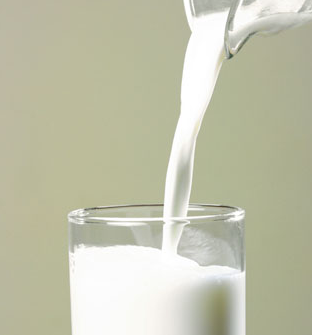
I, like you, often search online for new Paleo recipes. What I’m constantly and surprisingly met with are “Paleo” recipes that include dairy. Now, I know the Paleo/Primal movement is growing and evolving, so changes will occur. And what seems to be happening is a meshing of the Paleo diet tennets set forth by Cordain and the philosophies of Mark Sisson of www.marksdailyapple.com, PLUS your own addictions. And by addictions I mean cheese, cream, and butter.

Nowhere in Cordain’s books does he promote, or even condone, the consumption of dairy. In fact, he believes that dairy is pretty awful for us and he’s tight with Pedro Bastos, the (anti-)dairy Paleo researcher from Portugal. Cordain, who by the way owns the rights to the term “Paleo Diet”, believes dairy can cause anything from acne to cancer to insulin resistance.

In Sisson’s opinion, you should eat ghee and butter whenever you want and consume heavy cream, cheese, and yogurt in moderation. He is very serious about raw and grass-fed sources of dairy, though. And fermentation when possible.

My question is this: when did it become ok for people who write books and blogs entitled “Paleo something or other” to publish recipes that are chockablock (yes, that’s a word) with dairy? Dairy is not Paleo, people. Of course, neither is vinegar, so I guess I should stand down on this one since some of our “Paleo” recipes at paleoplan.com call for that…

The point is that dairy actually REALLY does cause problems for a lot of people, and everyone with their books and blogs is confusing Paleo eaters by telling them to never give it up. Yes, we all love cheese. I adore cheese. I love milk and all things made from it. If I could eat dairy without significant ailments, I probably would indulge sometimes. But in my opinion, every single person needs to cut it out of their diet for the first month or so of going Paleo/Primal to find out if they have a problem with it. I can’t stress this enough.

There are people who are having major digestive problems, not losing weight, feeling fatigued, having skin problems or a myriad other symptoms because they refuse to give up their dairy (or they don’t even know they should). It’s not like everyone is heeding the advice to get their dairy from grass-fed cows, either. Most grocery stores don’t even sell grass-fed milk products. So that means that you may as well be on the Atkins diet, which you know I’m not such a huge fan of.

Conventional dairy is gross, to be quite honest. It’s full of pus from the cows’ infected teats. It has to be pasteurized because there’s so much bacteria in it, rendering its nutrients less available to us and its sugars less digestible. It’s also homogenized, which means the allergenic proteins can get stuck in the fat globules, which means that even if you’re eating the butter/ghee or cream, there might be some unwanted protein in there. Some say that up to 80% of the world’s population is at least a little bit lactose intolerant after early childhood, and it’s because we weren’t evolutionarily brought up to suck on animals’ teats after we’re weaned. There’s a reason dairy doesn’t agree with people.

The conventional milk in the United States oftentimes comes from cows who are pregnant. FYI, you’re not supposed to get a cow pregnant when she’s nursing her baby because a nursing cow should have time to recuperate before she gets pregnant again. Small, ethical farms won’t do that to their animals – it’s abusive. Anyway, there’s a ton of extra hormones in the milk that you’re drinking from that pregnant cow, like estrogen. Extra estrogen causes things like allergies, terrible eczema in children and adults, endometriosis, early puberty (anyone notice their kids developing breasts early these days?), early onset of menstruation, heinous menstrual cramps, decreased sex drive, acne, infertility, prostate cancer, man boobs, osteoporosis, here’s a list for you.

Healthy, indigenous cultures who have dairy in their diets ferment the stuff. They know it’s hard to digest otherwise, and they certainly aren’t drinking homogenized or pasteurized milk fortified with sythetic, sometimes harmful “nutrients”. Modern Western people neither ferment their dairy nor get it from grass-fed sources. The reason for the grass-fed push is that the grass imparts a fantastic nutrient profile to the milk, and it means the cow was eating what it was supposed to, so she was a healthy animal (so her teats are not full of bacteria and pus). It also means the dairy farm is more ethical than not.

So think about this for yourself. There’s more information about dairy in our ebook we just published, too, in case you want more details. Give dairy up for a month and then try it again. See if it makes your skin itch, your face break out, your digestion go wonky, or your head hurt. Watch your menstrual cycle to see if it responds negatively to dairy. Does it make you tired? All these things are impossible to notice unless you take it out of your diet and see how you feel without it. It’s irresponsible for us in the Paleo/Primal world to just dismiss this issue just because dairy is delicious and we don’t feel like giving it up.

Don’t think just because it’s grass-fed, whole-fat dairy from raw milk that it’s without issue. I just got brave a couple weeks ago and put grass-fed ghee into my otherwise dairyless diet. I LOVE ghee. It’s amazing, but my skin got red and itchy after a day and I broke out with zits all over. I have scabs on my abdomen from itching so much. The only thing that changed about my diet was the ghee.

Think it over. And tell us, what have your experiences with dairy been?

UPDATE
Dr. Loren Cordain, the author of The Paleo Diet and several other Paleo books, weighed in on this blog post via email on 12/8/11. Here’s what he had to say(thanks for the support, Dr. Cordain!):

Hi Neely,

I am definitely on board with you. Dairy should not be part of a regular Paleo diet except on rare occasions as per the 85:15 rule I have laid out in my first book. In my next book (The Paleo Answer, available at Amazon on Dec 20), I have devoted an entire chapter to the health hazards of dairy consumption. You have my OK to post these comments wherever you like.

Best wishes,

Loren Cordain, Ph.D., Professor
Department of Health and Exercise Science
Colorado State University

Pick up a copy of Paleo Plan’s Quickstart Guide and Paleo Challenge eBook today!
17 Comments

  1. totally agree that you should cut it out in the beginning. i cut it out for sixty days, and think that was one of the smarter decisions i made. frankly, today, i think i’d still be fine, or even better off without it, but i do eat dairy. mark sisson & kurt harris gave me my introduction to this movement, not cordain. could the ‘gatekeeper’ account for much of this? (by the way, i am lactose intolerant, and can only eat firm aged cheese, ghee, butter, or heavy cream.)

    i often wonder the same thing about rice, which seems to be the darling of the paleo world these days, even though it’s inexorably linked to agriculture & the grain based diet, IMHO.

  2. Thank you, thank you, thank you for stating this. I too, am irritated by people distorting the principals of Paleo eating. I wish Loren Cordain would have more of a presence on the internet to keep more of us straight. My diet journey was one in which I first gave up dairy, then gluten, then I went Paleo. And every step has made me feel better. When I first gave up nothing other than dairy, it was amazing how much better I felt. I always knew that dairy bothered me, but whenever I mentioned this to a doctor, they would tell me to take it out of my diet for two weeks and see how I felt. Well I never got a response in two weeks, so I went back to dairy many times. It wasn’t until I gave up dairy for good, and after about 2 months, the response was amazing. Now if I eat dairy, my fingers and toes swell up like little sausages and I get bags under my eyes the next morning.

  3. Shot in the dark here, but maybe people are trying to capitalize on the term “paleo” and bring people in because it’s a more recognize phrase than “primal”. If you’re consuming dairy, you’re primal. If you avoid dairy, you’re paleo. It’s not a hard concept to grasp.

  4. For 50 years I have been into non-traditional health research. Researching, experimenting and evaluating in order to learn. It took 33 years to do a book…and I put the information I learned about dairy into it back in 1995. Dairy is the #1 cause of tumors in the human body. I learned first hand. I also learned that if you don’t feed a tumor – it can be regressed. It took 2-1/2 months to regress (dissolve) a lemon sized tumor which two doctors said – couldn’t be done in 1976. It never came back.

    Dairy was not designed for human consumption. It may taste good, but it produces many health problems. After giving up dairy, I didn’t get a cold in 13 years. If I give in and have a latte, within 15 minutes my nose starts dripping. Cheese is absolutely the worst, as it is over-loaded with protein…and fat. Plain milk contributes to a 500 lb growth in a baby calf in its first nine months…it takes about 8 lbs of milk to make 1 lb of cheese…it is such a concentrated food that only a giant animal 8 – 10 times larger than a calf could eat it.. What human wants to weigh well over a thousand pounds?

  5. You say, “Healthy, indigenous cultures who have dairy in their diets ferment the stuff.” Isn’t cheese (and yogurt etc.) fermented? Aren’t these products ok to eat if from grass fed, healthy, humanely kept animals? (If you find you are not sensitive to dairy?)
    Thanks.

    • @josscorkin – Hey Joss! My main point is that dairy – especially pasteurized, homogenized, low-fat dairy – has effects that aren’t as noticeable as gas and bloating. It’s best to take it out of your diet for a month to see if you are NOT sensitive to it in any way. The only cheese I’d really be ok with is that from unpasteurized, unhomogenized milk – the way it was traditionally consumed. That way you’re not getting any stray protein in your dairy fat and you’re getting all the nutrients possible. I understand people don’t like the idea of not eating dairy, but it really can be harmful to a lot of people. It’s your choice.

  6. So even milk that is unpasteurized that I get weekly as part of my cow share is not good for me? Because that’s on the contrary to what I’ve read before.

    • @Joshua – I actually didn’t say that it is definitely not good for you, but I stressed that milk doesn’t agree with many people digestively and/or immunologically, especially when it’s not fermented. It’s up to you to decide if it’s causing you harm. I think you’re on the right track with raw milk – good for you for going that route. But I tried raw milk, too, and it definitely didn’t work out for me, even fermented. My main point is that you have to at least give yourself the opportunity to find out if it’s harmful to you by taking it out of your diet completely for a month or so and then trying it again. Hope that helps clarify.

  7. Alright, I just wasn’t sure if it was or was not. Because it hasn’t caused me any problems and I’ve only heard of it’s benefits. But I read @Barbara’s comment and I wasn’t sure how true the part about cancer was.. Or if it even applied to raw unpasteurized milk. I don’t want to risk cancer. But I don’t want to just drop my cow share because of one comment. I’ve only heard benefits about raw milk. This was the first time I’ve heard otherwise.

    • @Joshua – There is some research to support dairy’s contribution to increased tumor size. However, it’s mostly when there is already a tumor. It doesn’t necessarily cause tumors. I actually asked Pedro Bastos – a Paleo dairy researcher – about what he thinks about raw dairy and his response is here. Here’s a good article I wrote with a bunch of links to his other research and others’ research. But honestly, I go way more in depth about it in our ebook, which you can purchase here. There are unseen effects of dairy, so it’s really a judgment call, even when it’s raw.

  8. I agree that regular milk is not good. However, for example, my doctor put me on antibiotics, so I’m adding organic sheep and goat’s milk yogurt while I’m on them. Are there any better ways to prevent unhealthy unbalances while on antibiotics? I know sunchokes are high in inulin, but I thought they required healthy gut flora to already be there in order to promote them.

    • Helen – I use a probiotic called Inner Eco,which is fermented young coconut water. It’s the strongest probiotic I know of, with over 100 billion organisms in each serving (1 tbs). I’d use that over yogurt any day.

  9. I SO appreciate this! It seems like ghee is totally accepted now – (a la whole 30 etc) – just tried some (grassfed,etc) and i have itchy eyes and skin! I wish i could have raw dairy and ghee -but it turns me a mess!

    Thanks for everything – really like the paleo plan and appreciate how informative and helpful it is

  10. Does this apply to milk and cheese from goats and camels? I’ve read (very little) that not only are they more nutritious but they’re also easier on the digestive system. Is it lactose that’s the issue, and do all milks contain it regardless of the source? What about lactose-free milk?

    • Maxwell – Yes, anything that comes from an animal’s teat is considered dairy. It all has lactose and casein in it, but in varying amounts and types (of casein). Some people can tolerate goat or other animals’ milk while they can’t tolerate cows’ milk, but it doesn’t always work that way. You’ll just have to experiment to see how your body really responds to dairy. It’s lactose and casein that are the issue – some people aren’t lactose intolerant, but they have a casein sensitivity and vice versa, and some people have issues with both.

  11. I drink 3-4 gallons of fat-free milk a week. No adverse reactions. No health problems. I’m 25. I don’t have acne or rashes or any of those ill effects described in the article. It’s a delicious, high-protein drink. I’ll eat paleo meals, but always with milk.

  12. What about all the research and findings about the health benefits of dairy? Like it aiding in weight loss and getting rid of belly fat. And it having a ton of protein? How can it be so good but so bad at the same time?

Leave a Comment